
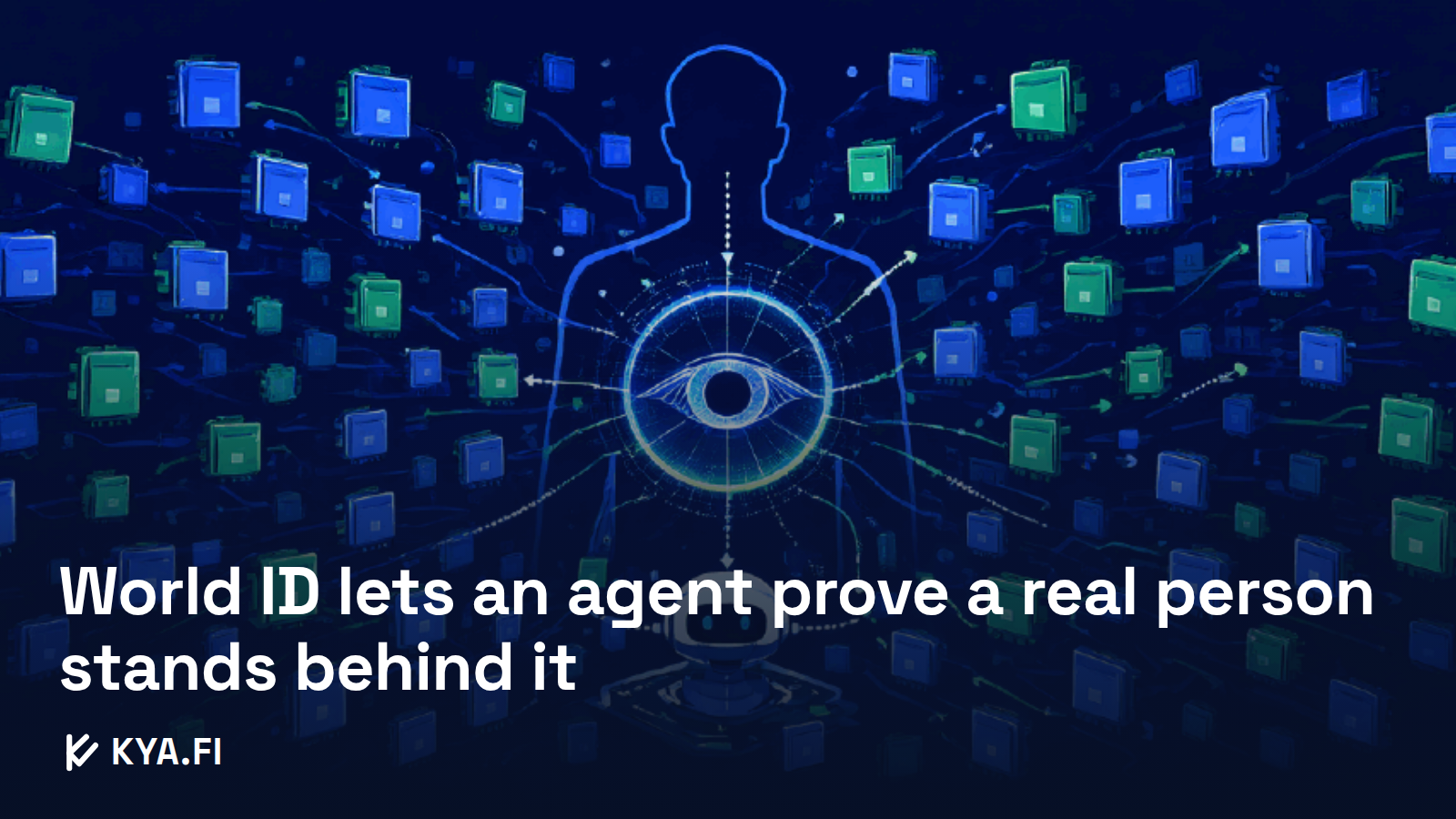
On 2 October 2026 World published a post arguing that as personal AI agents spread, websites and services will ask two questions: which agent is making this request, and did a real person originate it. World ID is pitched as the answer to the second — a privacy-preserving Proof of Human that a person can delegate to their agents, producing what World calls verified AI agents.
What happened
World’s post, “Muse, dots, Instinct, and the question every agent will be asked”, frames the problem around three new consumer agents: Meta’s Muse, OpenAI’s dots and the invite-only Instinct. It cites the friction this creates — notably Amazon blocking Muse from shopping on its site after it failed to disclose it was an AI agent.
World’s argument is one of attribution: first, an agent should indicate where it comes from and who built it; second, a service should be able to establish whether a real person stands behind it. Because there are roughly eight billion people but an unlimited number of agents, counting the humans behind agents matters for rate limiting, sales and allocation limits.
World ID stores a Proof of Human in the World ID app and uses zero-knowledge proofs so no personal information is revealed. A person can delegate that proof to their agents, and a relying service can then verify the agent is acting on behalf of a person and set limits accordingly. World summarises verified agents with three properties:
- Private — no personal information is shared when a proof is presented.
- Unique — each person is counted once, no matter how many agents they run.
- Neutral — built on an open protocol, usable by agents from any party.
World lists organisations building on this: Okta’s Human Principal early-access beta, which uses World ID to verify that a real human stands behind an AI agent; Vercel’s Workflow SDK, adding a World ID human-in-the-loop check to confirm a human approved a step; Exa, offering 100 free API requests a month to verified humans; and Browserbase, planning to let human-verified agents browse with fewer blocks. These are stated as early-access, beta or planned integrations rather than generally available products.
Why it matters for KYA
Know Your Agent is not only “what is this agent” but “who is accountable for it”. World’s model supplies the principal half of that: a cryptographic link from an agent back to one unique, verified human, plus a human-in-the-loop path for high-risk actions. It maps onto the principal, delegation and attribution vocabulary already used on this site.
It is also a useful contrast with agent authentication alone. An agent can present a valid identity and still be an unattributable script farm; Proof of Human is an attempt to make “one human, one agent, one allocation” verifiable. Two caveats: the technology binds an agent to a human, not necessarily to the human who owns the account being acted on, and the partner integrations are not yet shipping broadly.
Sources
- World: Muse, dots, Instinct, and the question every agent will be asked, 2 October 2026.
- World: Okta: Proof of Human for the agentic web (Human Principal, Okta Verify), 23 July 2026.
- World: AgentKit: Proof of Human for the agentic web.
Know Your Agent (KYA) explains agent identity, verification and accountability. This is an explainer, not legal or compliance advice — see our Sources & methodology. New to KYA? Start with What is Know Your Agent? and the glossary.